DIN Rail Power Distribution Block: Efficient Power Distribution for Control Panels
Inside a control panel, every wire has a job to do. Some carry power to PLCs, relays, sensors, fans, indicators, circuit breakers, and other electrical devices. When several components need power from the same source, the wiring can quickly become crowded if there is no clear distribution method.
A messy power layout does more than make the panel look unorganized. It can increase installation time, make troubleshooting more difficult, reduce available panel space, and create potential safety risks if connections become loose or overloaded.
That is why a DIN rail power distribution block is so useful.
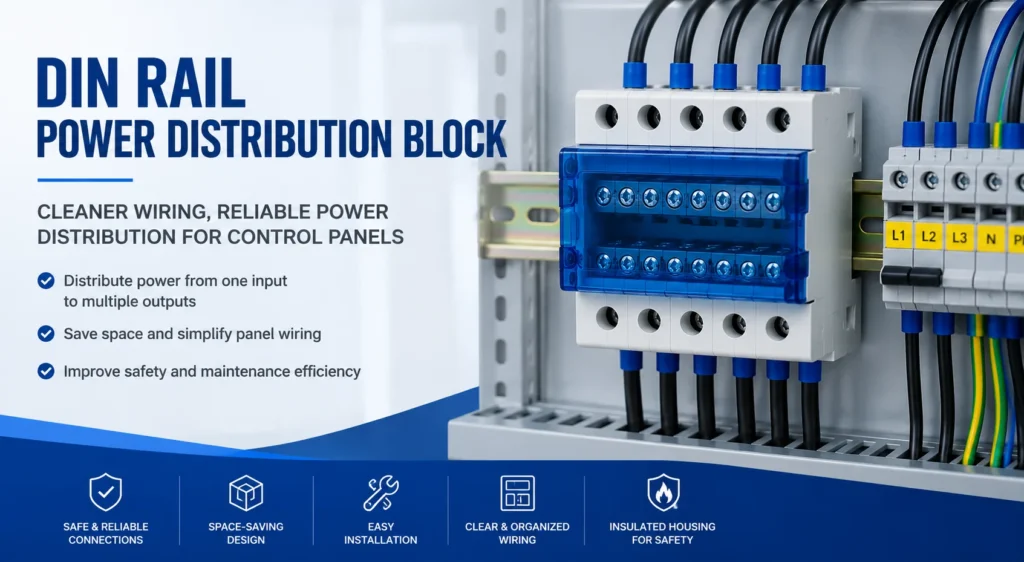
It provides a clean, compact, and reliable way to distribute power from one input source to multiple output circuits. Since it mounts directly onto a standard DIN rail, it fits neatly alongside terminal blocks, relays, circuit breakers, and other control panel components.
Whether it is used in an industrial control cabinet, automation system, electrical panel, machine equipment, or building control system, a DIN rail power distribution block helps simplify wiring and improve the overall organization of the electrical system.
In this article, we will explain what a DIN rail power distribution block is, how it works, where it is used, and what factors matter when selecting one for your application.
What Is a DIN Rail Power Distribution Block?
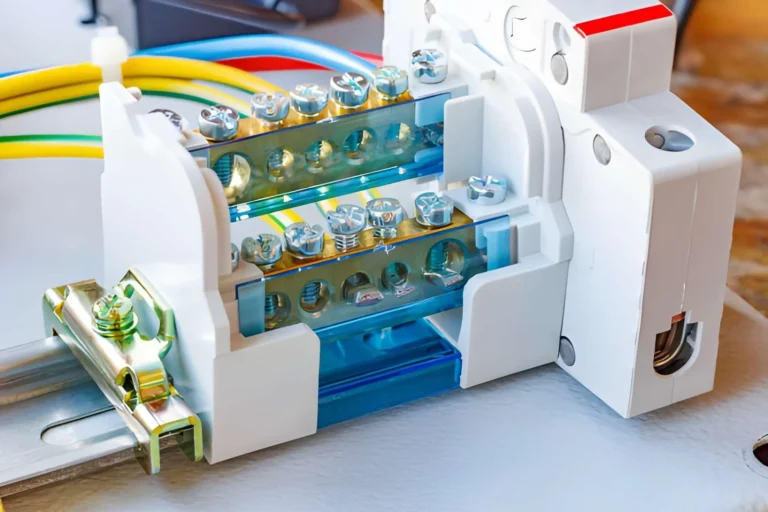
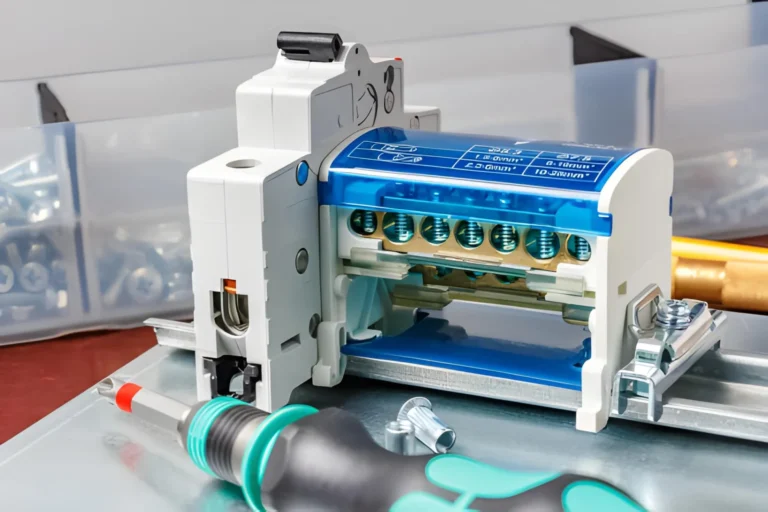
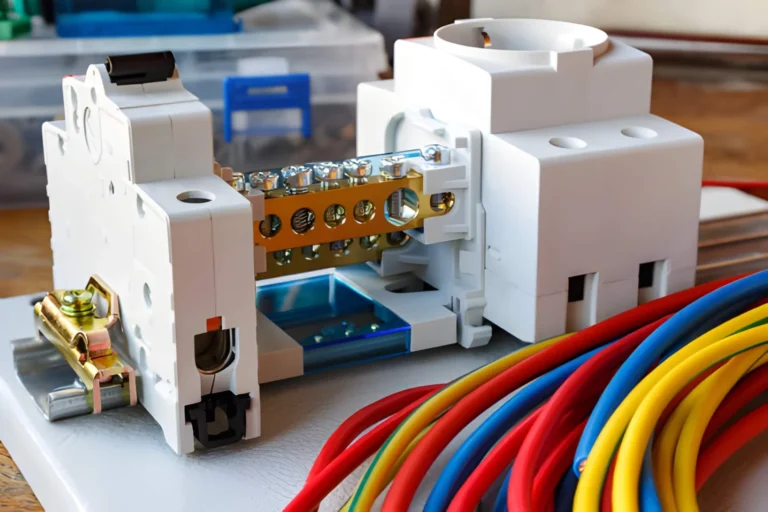
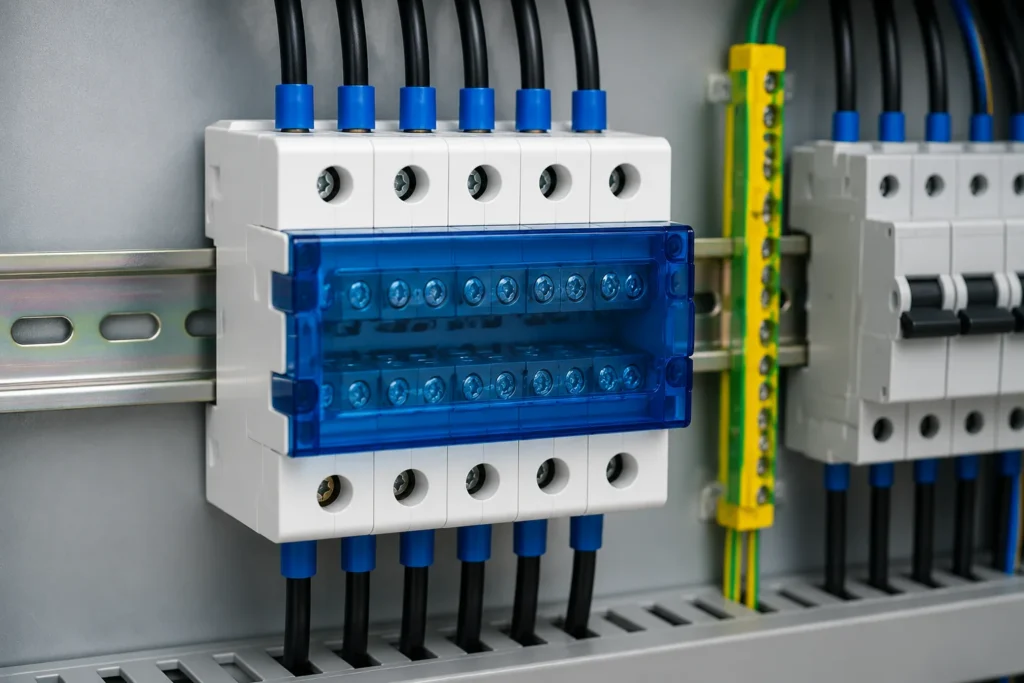
A DIN rail power distribution block is an electrical connection component used to distribute power from one main input to multiple output circuits. It is designed to be mounted on a standard DIN rail inside a control panel, electrical cabinet, machine control box, or distribution enclosure.
In a typical setup, the main power supply enters the distribution block through the input terminal. Inside the block, a conductive path transfers power to several output terminals. Each output can then supply power to a different device or circuit.
This makes the wiring layout cleaner and easier to manage compared with connecting multiple wires directly to one terminal or using improvised jumper connections.
DIN rail power distribution blocks are commonly used for:
- Control panel power distribution
- Industrial automation systems
- Electrical cabinets
- Machine control circuits
- HVAC and building control panels
- Renewable energy equipment
- Power supplies, PLCs, relays, sensors, fans, and auxiliary devices
Because they are mounted on DIN rails, these blocks are easy to install, replace, and organize. They also help create a more modular panel layout, which is especially useful when space is limited or when future maintenance is expected.
-1766215605.webp)
Why Power Distribution Matters in Control Panels
Power distribution is one of the most important parts of control panel design. A panel may contain many electrical and electronic devices, and each one needs a stable and properly connected power source.
Without a clear power distribution structure, wiring can become complicated very quickly. Installers may need to run multiple wires from the same power source, add extra jumpers, or stack conductors in ways that are difficult to inspect and maintain.
Over time, this can create several problems:
- Crowded wiring space
- Difficult troubleshooting
- Longer installation time
- Higher risk of loose connections
- Poor heat dissipation around terminals
- Harder maintenance and future expansion
- Increased risk of wiring errors
A DIN rail power distribution block helps solve these problems by giving the panel a dedicated point for power distribution. Instead of routing many wires from one source, the installer can bring power into the distribution block and then distribute it to each branch circuit in an organized way.
The result is a cleaner, safer, and more serviceable control panel.
How Does a DIN Rail Power Distribution Block Work?
A DIN rail power distribution block works by taking power from one main input connection and distributing it to multiple output connections. This allows several devices or branch circuits to receive power from the same source in a controlled and organized way.
The structure is usually simple, but very practical.
A main power cable is connected to the input side of the block. Inside the block, a conductive metal part, often copper or copper alloy, carries the current to multiple output terminals. Each output terminal can then be connected to a separate device, circuit, or load.
Because the block is mounted on a DIN rail, it can be installed neatly inside the panel with other modular components such as terminal blocks, relays, circuit breakers, power supplies, and PLC modules.
Input Connection
The input terminal is where the main power supply enters the distribution block.
This power may come from a main switch, circuit breaker, fuse holder, power supply, transformer, or another upstream device. In many cases, the input terminal is designed to accept a larger wire size because it carries the combined current that will be distributed to several outputs.
For this reason, it is important to check the input wire range and rated current before selecting a DIN rail power distribution block.
Internal Conductive Path
Inside the block, the input power is transferred through an internal conductive path. This conductive path may be a busbar, metal strip, or integrated conductive structure.
Its job is to carry current safely from the input side to the output terminals.
The quality of this internal conductor matters because it affects current capacity, heat generation, voltage drop, and long-term reliability. A well-designed distribution block should provide stable electrical contact and proper insulation between live parts and external surfaces.
Output Connections
The output terminals are used to connect power to multiple branch circuits or devices.
For example, one DIN rail power distribution block may distribute power to:
- PLC modules
- Relays
- Sensors
- Indicator lights
- Cooling fans
- Power supplies
- Circuit breakers
- Control transformers
- Auxiliary devices
Each output connection should match the required wire size and current rating of the connected device. When the output connections are clearly organized and labeled, maintenance becomes much easier.
Common Applications of DIN Rail Power Distribution Blocks
DIN rail power distribution blocks are widely used in electrical panels and control systems where power needs to be distributed safely and efficiently. They are especially useful in applications where space is limited and wiring organization is important.
Control Panels
Control panels often contain many devices that require power, including PLCs, relays, I/O modules, circuit protection devices, fans, indicators, and sensors.
A DIN rail power distribution block helps distribute power from one source to multiple panel components without creating a messy wiring layout. It also allows installers to organize branch circuits more clearly, which makes future troubleshooting and maintenance easier.
In control panels, DIN rail distribution blocks are commonly used for both AC and DC control power distribution, depending on the system design and product rating.
Industrial Automation Systems
Industrial automation systems often rely on many connected electrical and electronic components. Motors, sensors, actuators, control modules, and safety devices all need reliable power connections.
A DIN rail mounted distribution block helps keep these connections organized inside automation cabinets and machine control panels.
In production environments, clean wiring is not just about appearance. It also helps reduce downtime. When wiring is easier to trace and inspect, technicians can identify problems faster and return equipment to operation more quickly.
Electrical Cabinets
Electrical cabinets are used in factories, machinery, building systems, energy equipment, and many other applications. Inside these cabinets, power must often be distributed to multiple circuits or devices.
A DIN rail power distribution block provides a compact solution for cabinet wiring. It can be mounted directly on the same rail as other components, helping create a more modular and space-saving layout.
This is especially useful when the cabinet has limited internal space or when the wiring needs to be expanded later.
Machine Building
In machine building, electrical systems must be reliable, compact, and easy to maintain. A machine control box may include power supplies, motor controls, sensors, relays, safety circuits, and operator interface devices.
Using a DIN rail power distribution block allows machine builders to distribute power more efficiently within the control system.
It also supports a repeatable wiring layout, which is useful for manufacturers who build multiple machines with similar electrical designs.
Renewable Energy Systems
Renewable energy systems, such as solar power equipment and energy storage systems, often require organized power distribution inside electrical enclosures.
Depending on the product rating, DIN rail power distribution blocks may be used for AC or DC distribution in control circuits, monitoring equipment, auxiliary power circuits, or low-voltage control systems.
For these applications, it is especially important to check voltage rating, current rating, wire size, insulation, and environmental requirements.
HVAC and Building Control Systems
HVAC systems and building automation panels often contain controllers, relays, sensors, actuators, dampers, thermostats, and communication devices.
A DIN rail power distribution block helps distribute control power in a clean and organized way. It can also make the panel easier to service when technicians need to inspect wiring, replace components, or expand the system.
In building control panels, space-saving installation and clear circuit identification are especially valuable.
Key Benefits of Using a DIN Rail Power Distribution Block
A DIN rail power distribution block may look like a small component, but it can make a big difference in panel design, wiring efficiency, and long-term reliability.
Cleaner Wiring Layout
One of the biggest advantages is cleaner wiring.
Instead of running several wires from a single power source or stacking conductors under one terminal, a distribution block creates a dedicated point for power distribution. Each output can be routed to a specific device or branch circuit.
This makes the panel easier to read, easier to wire, and easier to maintain.
A clean wiring layout also reduces the chance of wiring mistakes during installation or service.
Space-Saving Installation
DIN rail components are designed to fit neatly inside electrical panels. Since a DIN rail power distribution block mounts directly on the rail, it can be installed alongside terminal blocks, circuit breakers, relays, and other modular components.
This helps make better use of panel space.
In compact control cabinets, saving even a small amount of space can be important. A well-selected distribution block can reduce wiring clutter and eliminate the need for extra connection points or improvised jumpers.
Faster Installation
A DIN rail power distribution block can help reduce wiring time.
Installers can bring the main power into the block and then connect each output circuit in a clear sequence. This is often faster than creating multiple separate wire connections from the same source.
Some models also use push-in or spring connection technology, which can speed up wiring even further, especially in repetitive panel-building work.
Easier Maintenance and Troubleshooting
When power distribution is organized, troubleshooting becomes much easier.
Technicians can quickly identify where power enters the block and where each output circuit goes. If the panel is properly labeled, they can trace circuits with less confusion and less downtime.
This is especially valuable in industrial automation and machine control systems, where every minute of downtime may affect production.
Improved Connection Reliability
A proper power distribution block provides a more stable and secure connection point than improvised wiring methods.
Loose wiring, overloaded terminals, and poor conductor contact can create heat, voltage drop, or intermittent faults. A well-rated distribution block helps reduce these risks by providing suitable terminals, proper conductor clamping, and reliable internal current paths.
Of course, reliability still depends on correct installation, proper torque where required, correct wire size, and suitable product selection.
Better Safety
Safety is another important reason to use the right distribution block.
Many DIN rail power distribution blocks include insulated housings, protective covers, or finger-safe designs. These features help reduce the risk of accidental contact with live parts during installation or maintenance.
In panels that are opened frequently, or where safety requirements are strict, finger-safe construction and clear labeling can be especially important.
Main Types of DIN Rail Power Distribution Blocks
DIN rail power distribution blocks are available in different designs to match different wiring and power distribution requirements. The right type depends on the system voltage, current load, number of circuits, available space, and safety requirements.
Single-Pole DIN Rail Power Distribution Block
A single-pole DIN rail power distribution block is used to distribute one electrical potential from one input to multiple outputs.
It is commonly used for:
- DC positive distribution
- DC negative distribution
- Single-phase line distribution
- Control power distribution
- Auxiliary circuit distribution
This type is compact and simple, making it suitable for many control panels and machine control systems.
For example, a single-pole block may take 24V DC from a power supply and distribute it to several PLC modules, sensors, relays, or indicator lights.
Multi-Pole DIN Rail Power Distribution Block
A multi-pole DIN rail power distribution block contains multiple distribution paths in one unit or assembly. It may include two-pole, three-pole, or four-pole configurations, depending on the application.
Multi-pole blocks are useful when more than one conductor needs to be distributed in an organized way.
Common examples include:
- L and N distribution for single-phase AC systems
- Positive and negative distribution for DC systems
- L1, L2, and L3 distribution for three-phase systems
- Line, neutral, and protective earth layouts
Using a multi-pole design can help keep related circuits grouped together and reduce wiring complexity inside the panel.
Finger-Safe Power Distribution Block
A finger-safe power distribution block is designed with insulated protection around live conductive parts. Some models also include transparent covers, recessed terminals, or touch-safe housings.
This type is useful in panels where technicians may need to inspect, test, or maintain components.
Finger-safe designs help reduce the risk of accidental contact with energized parts. They also make the panel look cleaner and more professional.
For industrial control panels, electrical cabinets, and building control systems, this can be an important safety feature.
High-Current Power Distribution Block
A high-current power distribution block is designed for applications with larger current loads.
It may have larger input terminals, heavier internal conductors, stronger insulation, and higher current ratings. These blocks are often used for main power distribution, motor control systems, industrial equipment, or larger electrical cabinets.
When selecting a high-current block, it is important to check:
- Rated current
- Rated voltage
- Wire size range
- Temperature rise
- Short-circuit current rating, if required
- Installation spacing
- Required protective cover
High-current applications require careful selection because undersized components may overheat or fail.
Compact DIN Rail Distribution Block
A compact DIN rail distribution block is designed for panels where space is limited.
It provides multiple output connections in a smaller footprint and is commonly used in compact control boxes, machine equipment, building control panels, and small automation systems.
Although compact size is helpful, it is still important to confirm current rating, voltage rating, wire size, and heat dissipation requirements.
A smaller block should never be selected only because it fits the space. It must also match the electrical requirements of the system.
Key Factors to Consider When Selecting a DIN Rail Power Distribution Block
Selecting the right DIN rail power distribution block is critical for safe, efficient, and reliable panel operation. Here are the key factors to keep in mind:
Rated Current
The block must handle the total current of the input and all output circuits. Underrated blocks can overheat, cause insulation damage, or even fail catastrophically.
- Check both input and output current ratings.
- Leave some safety margin to account for future expansions or peak loads.
- Consider continuous operation conditions and environmental temperature effects.
Rated Voltage
Ensure the distribution block is rated for your system’s voltage, whether AC or DC. Using a block with insufficient voltage rating can lead to insulation breakdown or electrical hazards.
Number of Poles
Choose the correct number of poles for your application:
- Single-pole: typical for DC positive or AC line distribution.
- Two-pole: for positive/negative DC or L/N AC distribution.
- Three-pole: often for three-phase systems.
- Multi-pole: groups several conductors in one compact unit.
Input and Output Connections
- Verify the number of output terminals required.
- Check compatibility with conductor types (solid, stranded, ferrules).
- Confirm wire sizes allowed for each input and output.
- Consider the orientation of the terminals and ease of wiring in the panel.
Wire Size Compatibility
- The block must accommodate the correct AWG or mm² wire size for both input and outputs.
- Larger input wires may require larger terminal or connection technology.
- Over- or undersized wire can cause loose connections or overheating.
Mounting Method
- Confirm the DIN rail compatibility (usually 35mm standard).
- Ensure the block can be easily snapped on and off the rail if required.
- Check for vibration resistance and secure locking features, especially in industrial environments.
Connection Technology
DIN rail distribution blocks can feature different connection methods:
- Screw clamp
- Spring clamp
- Push-in
- Stud connection
- Busbar connection
Each has its pros and cons regarding installation speed, reliability, and maintenance.
Safety Features
- Finger-safe designs reduce accidental contact with live parts.
- Insulated housings and protective covers enhance safety.
- Flame-retardant materials improve panel compliance with standards.
Certifications and Standards
Depending on your market and application, look for blocks that meet relevant certifications:
- UL 1059 (Power Distribution Blocks)
- UL 508A (Control Panels)
- IEC standards
- CSA or CE compliance
- RoHS compliance
DIN Rail Power Distribution Block vs Terminal Block
Many users confuse terminal blocks with power distribution blocks. While they look similar and both mount on DIN rails, their functions differ:
| Feature | DIN Rail Power Distribution Block | DIN Rail Terminal Block |
|---|---|---|
| Main purpose | Distribute power from one input to multiple outputs | Connect or terminate wires |
| Current capacity | Typically higher | Varies depending on type |
| Structure | Single input to multiple output terminals | Modular connection points for individual wires |
| Typical use | Control panel power distribution, branch circuits | Wiring organization, signal and low-power circuits |
Conclusion: A terminal block is mainly for connecting wires. A power distribution block is specifically designed to handle one source feeding multiple circuits.
How to Choose the Right DIN Rail Power Distribution Block
A simple step-by-step selection approach:
- Confirm system voltage (AC or DC).
- Calculate total current load.
- Determine the number of output circuits.
- Choose the number of poles.
- Check input and output wire size ranges.
- Select the connection technology (screw, spring, push-in).
- Verify DIN rail compatibility.
- Evaluate safety features (finger-safe, protective cover).
- Confirm certifications (UL, IEC, CE, CSA).
- Plan panel layout, spacing, and labeling.
Recommended DIN Rail Power Distribution Blocks by Application
| Application | Recommended Type |
|---|---|
| Small control panel | Compact single-pole distribution block |
| DC control circuit | Two-pole DIN rail distribution block |
| Three-phase AC system | Multi-pole distribution block |
| High-current loads | High-current distribution block |
| Frequent maintenance area | Finger-safe power distribution block |
| Compact control cabinet | Space-saving DIN rail block |
| Automation equipment | Screw or push-in connection block |
| Building control system | Modular DIN rail power distribution block |
Conclusion
A DIN rail power distribution block is a small but essential component in control panels and electrical cabinets. It ensures clean wiring, reliable connections, safety, and easier maintenance.
Selecting the right block depends on voltage, current, poles, wire sizes, safety features, mounting method, and certifications. Properly chosen, it simplifies panel design, reduces downtime, and improves operational safety.
Looking for a reliable DIN rail power distribution block for your control panel? Contact our team to find the right solution for your application and electrical system.
FAQ About DIN Rail Power Distribution Blocks
What is a DIN rail power distribution block?
A device mounted on a DIN rail to distribute power from one input to multiple outputs.
What is the difference between a terminal block and a distribution block?
Terminal blocks connect individual wires; distribution blocks distribute power to multiple circuits.
Can distribution blocks be used in AC and DC systems?
Yes, if rated appropriately for the voltage and current type.
What does finger-safe mean?
It refers to protective housing preventing accidental contact with live terminals.
Are distribution blocks suitable for control panels?
Yes, they are widely used to organize power distribution in control and automation panels.