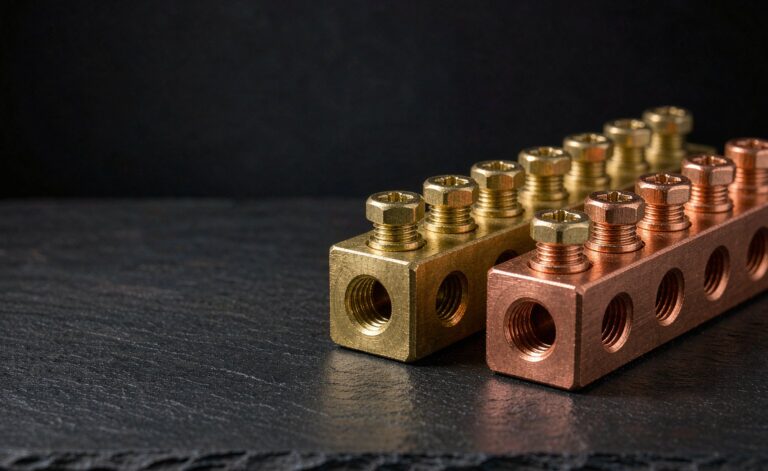
Have you ever opened an electrical panel and wondered why so many different types of terminal blocks are used instead of one universal connector?
The answer is simple: different wiring systems need different connection methods, current ratings, mounting styles, and safety features.
Terminal blocks help organize, secure, and distribute electrical connections in control panels, distribution boxes, machinery, and industrial equipment. Choosing the right type can improve wiring reliability, simplify maintenance, and reduce the risk of loose connections or overheating.
What Are Terminal Blocks?
Terminal blocks are electrical connection devices used to join two or more wires safely and securely. They provide a fixed connection point inside an electrical system, making wiring cleaner, easier to inspect, and easier to maintain.
In B2B electrical applications, terminal blocks are commonly used in:
Electrical control cabinets
Distribution boxes
Industrial automation equipment
Power supply systems
Machinery wiring
Commercial electrical installations
Instead of twisting wires together or relying on unstable connections, terminal blocks create a structured and serviceable wiring layout.
Common Types of Terminal Blocks
There are many different types of terminal blocks, and each one is designed for a specific wiring method or application.
Type
Connection Method
Typical Use
Key Advantage
Screw terminal block
Screw clamp
Panels, machinery
Strong mechanical connection
Spring terminal block
Spring clamp
Vibration environments
Fast wiring
Barrier terminal block
Screw with barrier
Power circuits
Clear separation
DIN rail terminal block
Rail-mounted
Control cabinets
Easy installation
Plug-in terminal block
Plug connector
Modular equipment
Quick replacement
PCB terminal block
Board-mounted
Electronics
Compact design
Grounding terminal block
Ground connection
Safety circuits
Reliable grounding
Fuse terminal block
Built-in fuse
Protection circuits
Circuit protection
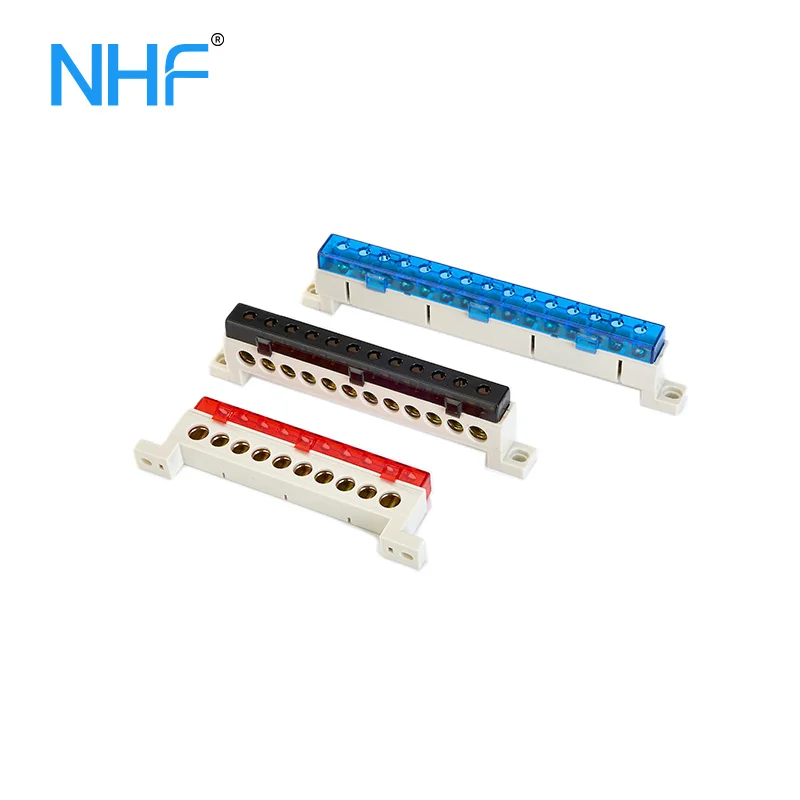
Brass terminal block / neutral bar
Screw fixation
Distribution boxes
Good conductivity
Brass Terminal Blocks and Neutral Bars
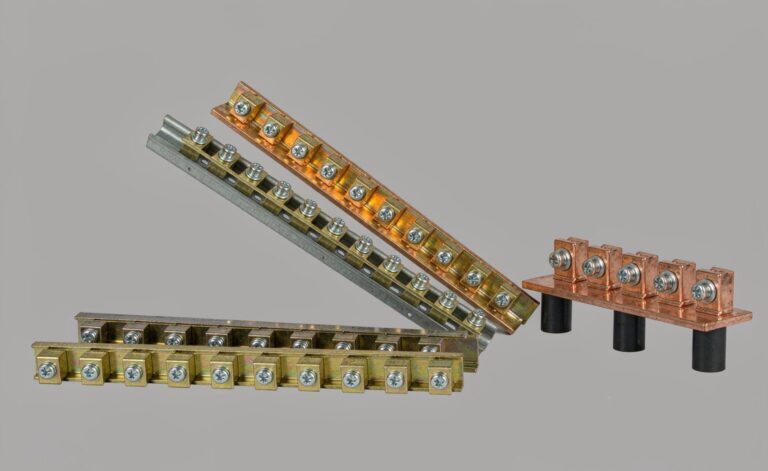
Brass terminal blocks and neutral bars are commonly used in distribution boxes, power distribution systems, and electrical panels.
Brass is widely used because it provides:
Good electrical conductivity
Strong mechanical performance
Corrosion resistance
Stable screw fixation
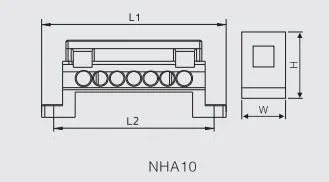
In distribution boxes, neutral bars help organize neutral wire connections and provide a reliable connection point. For example, an option such as the NHA10 Bridge Type Neutral Bar With Colorized Full Plastic Cover can be used in panel wiring applications where a brass conductor, galvanized screws, PC/ABS housing, and screw fixation are required.
If you are selecting terminal blocks for a distribution box or control panel, it is often helpful to check voltage range, conductor material, housing material, and installation method before making a decision.
Screw Terminal Blocks
Screw terminal blocks are one of the most common types of terminal block connectors. They use screws to clamp wires in place.
They are widely used because they provide a strong and stable mechanical connection. For electrical panel wiring, screw terminal blocks are often preferred when the connection needs to remain secure over long periods.
Typical applications include:
Control cabinets
Industrial machinery
Distribution boxes
Power connection terminals
Their main advantage is reliability. However, they require proper tightening. If the screw is too loose, the connection may overheat. If it is overtightened, the wire may be damaged.
Spring Terminal Blocks
Spring terminal blocks use spring pressure instead of screws to hold the wire.
They are useful in applications where fast wiring is required. They also perform well in environments with vibration, because the spring maintains constant pressure on the wire.
Common use cases include:
Automation systems
Railway equipment
Machinery with vibration
Compact control panels
Compared with screw terminal blocks, spring terminal blocks are faster to install. However, they may not always be the first choice for higher-current power distribution applications.
Barrier Terminal Blocks
Barrier terminal blocks include physical barriers between connection points. These barriers help prevent accidental contact between terminals.
They are often used in power circuits where separation and safety are important.
Typical applications include:
Power supply units
Industrial panels
HVAC equipment
Motor control systems
Barrier terminal blocks are useful when wiring needs to be clearly separated and easy to identify. They are especially practical in systems where technicians need to inspect or service connections regularly.
DIN Rail Terminal Blocks
DIN rail terminal blocks are designed to be mounted on a standard DIN rail. They are common in industrial control cabinets and automation panels.
When people search for types of DIN rail terminal blocks, they are usually looking for options such as:
Feed-through terminal blocks
Ground terminal blocks
Fuse terminal blocks
Disconnect terminal blocks
Multi-level terminal blocks
DIN rail terminal blocks are popular because they are modular. You can add, remove, or rearrange terminals as the panel design changes.
Plug-In Terminal Blocks
Plug-in terminal blocks use a detachable plug and socket design.
They are useful when equipment modules need to be replaced or serviced quickly. Instead of disconnecting each wire one by one, the user can unplug the connector section.
Common applications include:
Power supplies
Control modules
LED drivers
Industrial controllers
This type is ideal for modular equipment, but it may not be the best choice for all high-current or heavy-duty applications.
PCB Terminal Blocks
PCB terminal blocks are mounted directly onto printed circuit boards.
They connect external wiring to electronic circuits and are commonly found in:
PCB terminal blocks are compact and efficient, but they must be selected carefully according to pitch, current rating, voltage rating, and wire size.
Grounding Terminal Blocks
Grounding terminal blocks are used to connect protective earth wires.
They play an important role in electrical safety. In industrial wiring, proper grounding helps reduce electric shock risk and improves system protection.
These terminal blocks are commonly used in:
Control panels
Distribution cabinets
Machinery frames
Automation systems
A grounding terminal block is not just another connector. It is part of the safety system.
Fuse Terminal Blocks
Fuse terminal blocks combine wiring connection and circuit protection.
They include a fuse holder inside the terminal block structure, allowing a circuit to be protected against overcurrent.
Common applications include:
Control circuits
Sensor wiring
PLC systems
Low-voltage electrical panels
Fuse terminal blocks save space and make maintenance easier because the fuse is located directly at the terminal point.
How to Choose the Right Terminal Block
Choosing the right terminal block depends on the electrical and mechanical requirements of your system.
Key factors include:
Current rating:The terminal block must handle the required current safely.
Voltage rating:Always match the terminal block to the system voltage.
Wire size:The terminal must support the correct wire gauge.
Connection method:Screw, spring, plug-in, and PCB designs suit different applications.
Mounting type:DIN rail, panel mount, PCB mount, and busbar-style designs all serve different layouts.
Application environment:Consider vibration, humidity, heat, and maintenance frequency.
Material:Brass, copper alloy, plastic housing, and insulation materials affect durability and performance.
Common Mistakes When Selecting Terminal Blocks
A terminal block may look simple, but the wrong choice can create long-term problems.
Common mistakes include:
Choosing a terminal block with insufficient current rating
Ignoring wire size compatibility
Using the wrong mounting type
Overlooking heat and vibration conditions
Mixing unsuitable materials in demanding environments
Selecting based only on price
For industrial wiring and power distribution, the correct terminal block should match both the electrical load and the installation environment.
Conclusion
Understanding the main types of terminal blocks helps you design safer, cleaner, and more reliable electrical systems. Screw terminal blocks, spring terminal blocks, DIN rail terminal blocks, plug-in connectors, PCB terminals, grounding terminals, fuse terminals, and brass neutral bars all serve different purposes.
For B2B applications such as control cabinets, distribution boxes, industrial machinery, and power distribution systems, the best choice depends on current rating, voltage, wire size, mounting style, and installation environment. When selected correctly, terminal blocks do more than connect wires—they improve system safety, maintenance efficiency, and long-term reliability.
FAQ
What are the different types of terminal blocks?
The main types include screw terminal blocks, spring terminal blocks, barrier terminal blocks, DIN rail terminal blocks, plug-in terminal blocks, PCB terminal blocks, grounding terminal blocks, fuse terminal blocks, and brass terminal blocks.
What is the difference between screw and spring terminal blocks?
Screw terminal blocks use screws to clamp wires, while spring terminal blocks use spring pressure. Screw types offer strong mechanical fixation, while spring types allow faster wiring and better vibration resistance.
What are DIN rail terminal blocks used for?
DIN rail terminal blocks are used in control cabinets, automation panels, and industrial electrical systems. They mount onto DIN rails and provide organized wire connections.
How do I choose the right terminal block?
Choose a terminal block based on current rating, voltage rating, wire size, mounting type, connection method, material, and application environment.
Are brass terminal blocks suitable for electrical panels?
Yes. Brass terminal blocks are commonly used in electrical panels and distribution boxes because brass provides good conductivity, mechanical strength, and corrosion resistance.
Four constraints determine neutral bar size: terminations needed, unbalanced current per NEC 220.61, largest conductor and mounting centres — with real dimension charts.
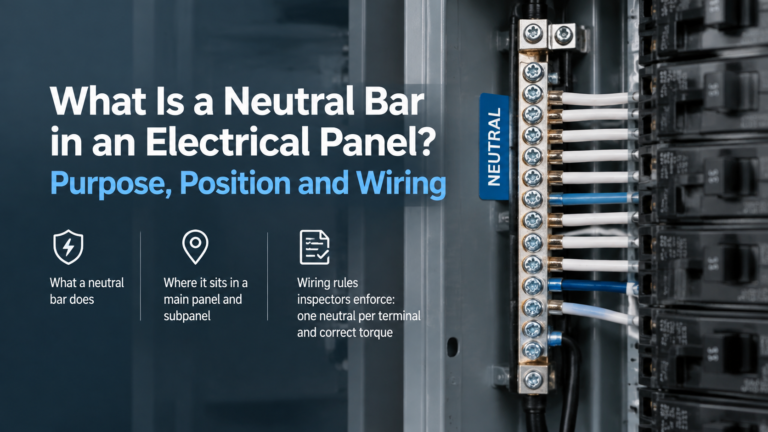
The neutral bar is the return path for every line-to-neutral load. How it works, where it sits, when it must be isolated from the enclosure, and the rules that govern it.