Blog
Complete Guide to DIN Rail Terminal Blocks Features and Selection
Discover high-quality din rail terminal blocks from Naihang Electric featuring screw push-in and feed-through types with reliable performance and certifications
Read More
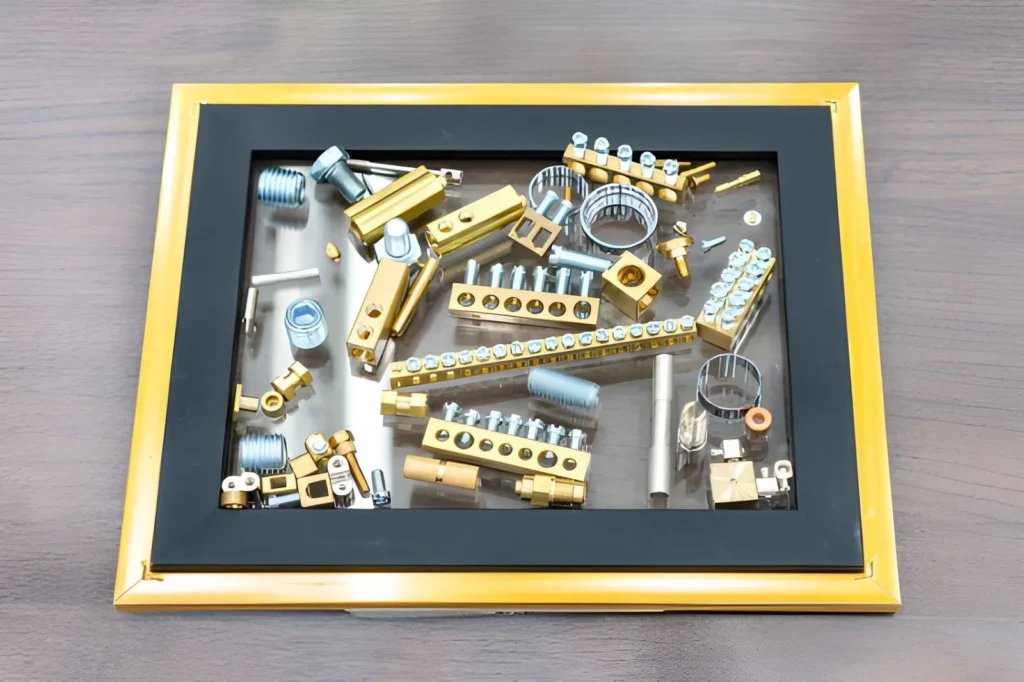
Have you ever wondered why some engineers insist on brass terminal blocks while others swear by copper?
If you’re working on an industrial project, control panel, or electrical distribution system, choosing the right terminal block can make a big difference in performance, durability, and safety. In this article,
we’ll explore the differences between brass and copper terminal blocks, their applications, advantages, and how to decide which material is best for your needs. By the end, you’ll have a clear understanding to make an informed decision.
Terminal blocks are connectors used to join electrical wires safely and efficiently. They are common in industrial control panels, machinery, and power distribution systems. The key difference lies in the material of the conductive part: brass or copper.
Both materials have their strengths, but your choice depends on the specific electrical and mechanical requirements of your application.
If you’re working on power distribution, control panels, EV chargers, solar combiner boxes, or industrial machines, terminal blocks are one of those “small” components that quietly determine whether everything runs smoothly…or overheats and fails.
Choosing between brass and copper is really about balancing four things:
Copper terminals are typically made from high-purity ETP copper (around 99.9% copper), which gives them very high electrical conductivity and excellent crimping behavior. Brass, by contrast, is a copper–zinc alloy (often around 60–70% copper, 30–40% zinc) that trades some conductivity for strength, rigidity, and easier machining.
When it comes to current flow, conductivity is critical. Copper is renowned for its excellent electrical conductivity, which is slightly higher than brass. This means it can carry more current with less energy loss.
Comparison Table: Conductivity
| Material | Conductivity (MS/m) | Strength | Corrosion Resistance |
|---|---|---|---|
| Copper | 58 | Medium | Low |
| Brass | 28–40 | High | High |
If your system requires maximum electrical efficiency, copper might be preferable. However, brass is often strong enough for most industrial applications, especially when mechanical stability is a priority.
Brass has a higher tensile strength compared to copper, which makes it more resistant to deformation under mechanical stress. In environments where vibration or repeated handling occurs—think factory control panels or switchgear assemblies—brass terminal blocks tend to hold up better.
Key Benefits of Brass Terminal Blocks:
Copper blocks, while excellent in conductivity, may deform more easily under repeated torque or mechanical stress, which can compromise connections.
Corrosion is a silent enemy in electrical systems. A corroded terminal block can lead to poor connectivity, overheating, and even electrical failure.
When to Prioritize Corrosion Resistance:
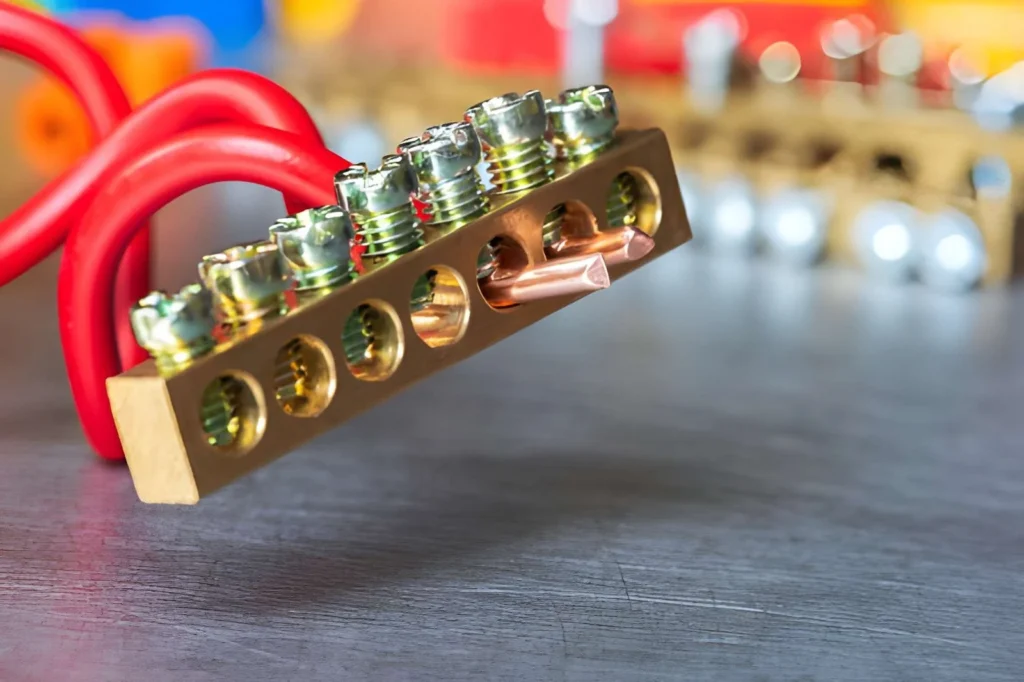
Instead of thinking “brass vs copper” in absolute terms, it’s more helpful to think in use cases.
Budget is always a factor. Copper terminal blocks tend to be slightly more expensive due to the material cost and machining requirements. Brass offers a cost-effective alternative while providing durability and decent conductivity.
| Material | Approximate Cost | Longevity | Maintenance |
|---|---|---|---|
| Brass | Moderate | High | Low |
| Copper | Higher | Medium | Medium |
Investing in brass may reduce maintenance costs over the long term, especially in demanding industrial settings.
Both brass and copper terminal blocks come in a variety of types, designed for specific applications. Common types include:
When selecting a terminal block, consider the mechanical, electrical, and installation requirements. For example, a DIN rail brass terminal block may be ideal for industrial distribution boards, while a copper PCB terminal block might serve well in high-conductivity electronic circuits.
So, how do you decide between brass and copper terminal blocks?
Choose Brass if:
Choose Copper if:
Remember, the “best” material depends on your project’s specific electrical, mechanical, and environmental requirements. If you’re unsure which material is ideal for your application, don’t hesitate to contact us to discuss your project requirements—we can help you find the most suitable terminal block solution.
Here’s a simple “cheat sheet” you can use during specification or design reviews.
If you’d like a more tailored recommendation for your project, you can always reach out with your load data, environment, and enclosure details and we can suggest a short‑list of suitable terminal block options.
Yes, brass terminal blocks can handle most industrial current ratings. For extremely high-current circuits, copper may offer slightly better performance due to higher conductivity.
Yes, copper oxidizes over time, which can reduce conductivity. Protective coatings or plating can mitigate this issue.
Brass DIN rail terminal blocks are widely preferred for control panels because they combine durability, sufficient conductivity, and ease of installation.
Check the current rating, wire size compatibility, and the voltage requirements. Size charts from the manufacturer are a helpful reference.
Yes, brass performs well in outdoor or humid environments due to its corrosion resistance, making it suitable for many industrial applications.
For the same geometry and current, brass terminal blocks will generally run hotter because brass has significantly higher electrical resistance than copper, even though its thermal conductivity can help limit heat spread in some designs.
Choosing between brass and copper terminal blocks doesn’t have to be confusing. Brass offers a strong, corrosion-resistant, and cost-effective solution for industrial and mechanical applications, while copper provides maximum conductivity for high-current and precision electronic projects.
Consider the current, environment, mechanical stress, and budget before making your selection. By understanding the strengths and limitations of each material, you can ensure safe, reliable, and efficient connections in your electrical systems.
If you want tailored advice for your specific project or need a quote for brass or copper terminal blocks, feel free to contact us. Making the right choice today can save you maintenance headaches tomorrow.
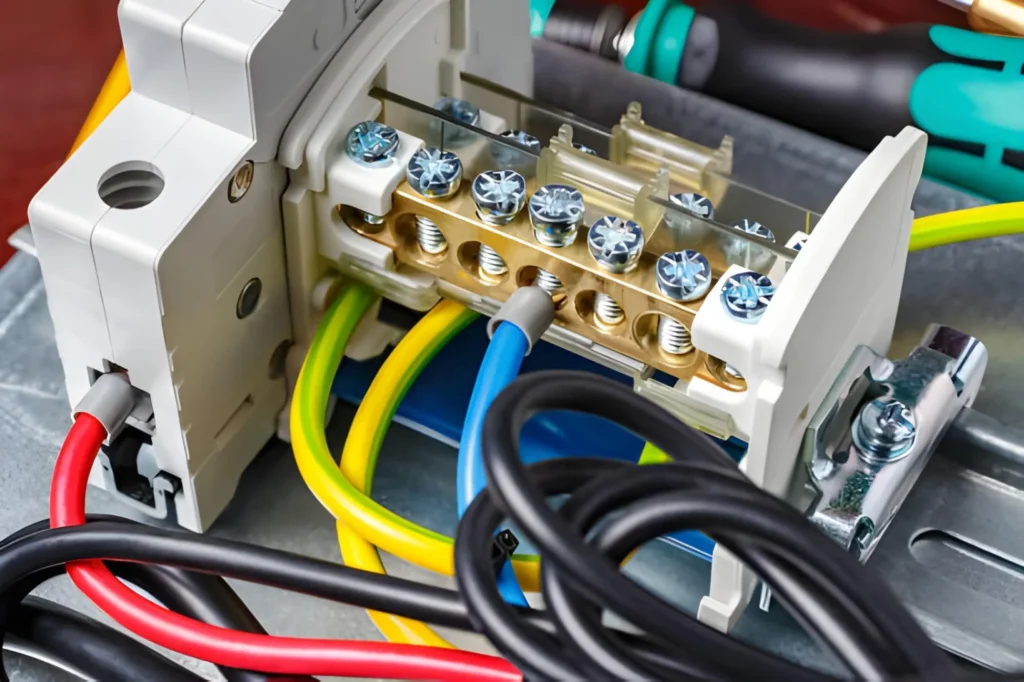
Discover high-quality din rail terminal blocks from Naihang Electric featuring screw push-in and feed-through types with reliable performance and certifications
Read More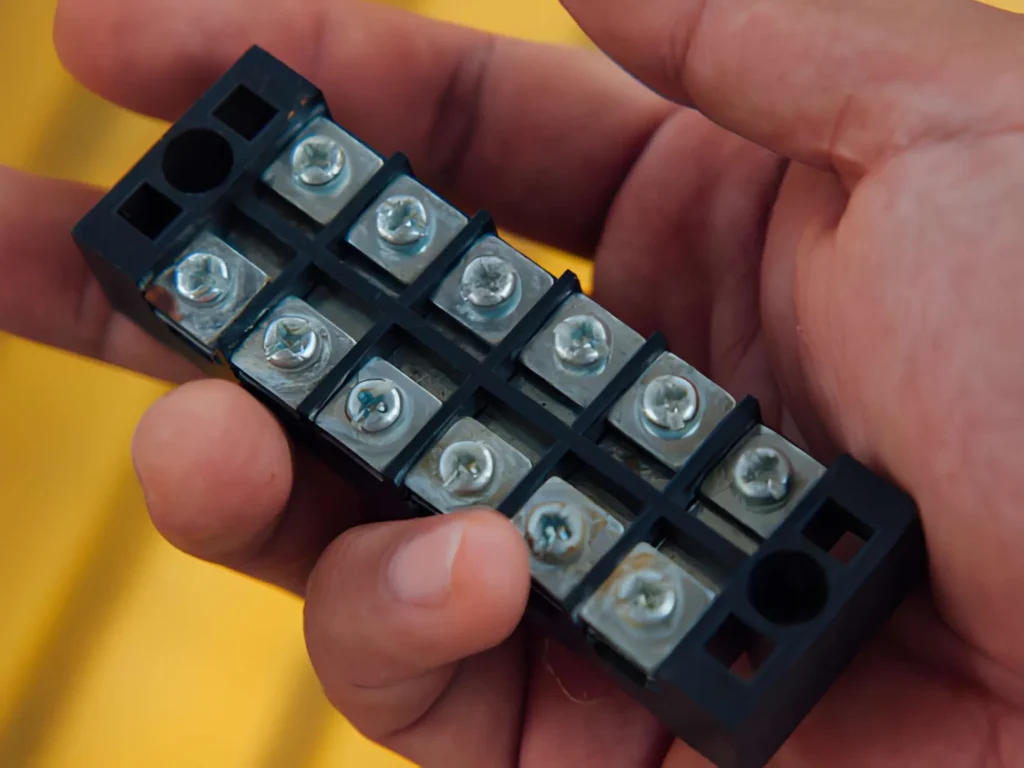
Discover high-quality terminal block strips with durable insulation, multiple pole options, UL certification, and easy installation for safe wiring solutions.
Read More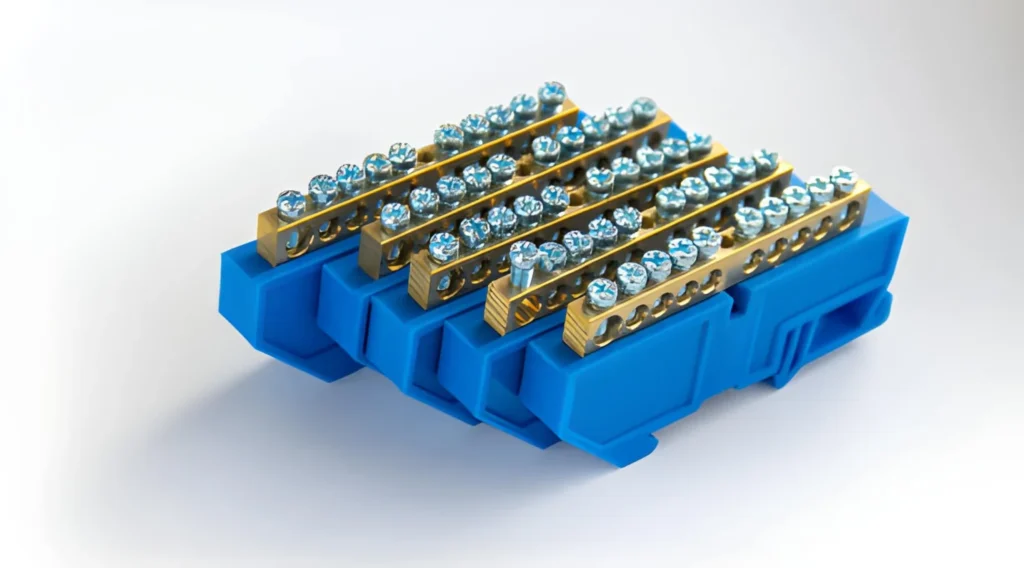
NaiHang Brass Terminal Blocks offer high conductivity, precision CNC machining, corrosion resistance, and customizable configurations for industrial use. Product Overview Introduction: Brass Terminal Block for Power Distribution NaiHang’s brass terminal blocks offer a reliable solution for power distribution, grounding, and neutral connections in industrial and electrical applications. Designed to serve as a robust brass wiring […]
Read More