Terminal Block Strip Features Types Applications and Safety
Table of Contents
What Is a Terminal Block Strip?
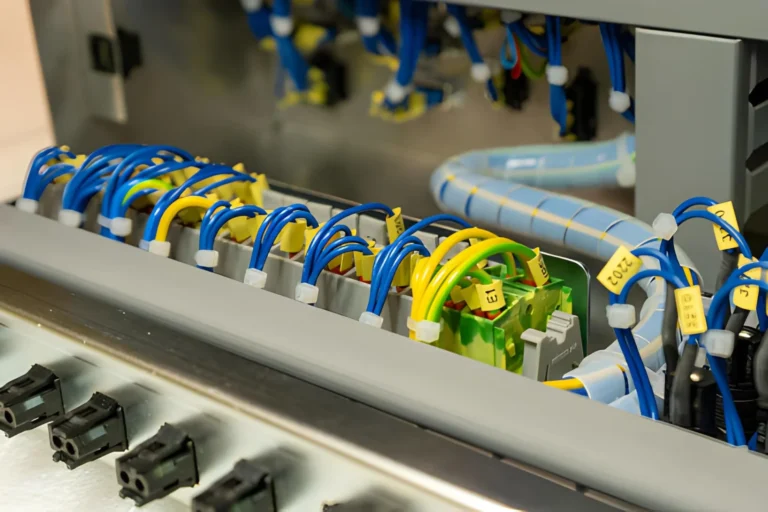
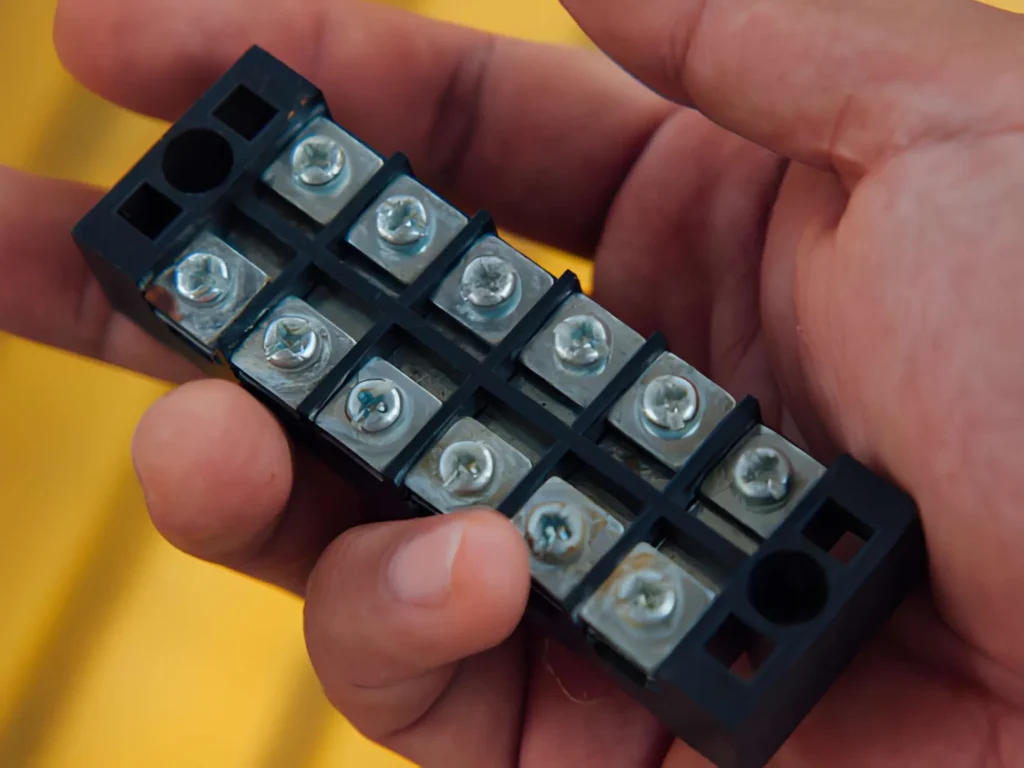
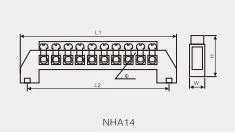
A terminal block strip is a simple yet essential electrical connector used to join multiple wires safely and securely. At its core, it consists of several key components:
- Insulating base: Usually made from durable thermoplastic, this base prevents electrical shorts and protects users.
- Metal conducting strip: This conductive strip connects wires electrically, often crafted from brass or nickel-plated metals for excellent conductivity.
- Screw clamps: Each wire is held tightly by screw clamps, ensuring a stable and removable connection.
- Barriers: These provide physical separation between terminals to avoid accidental shorts or interference.
Terminal block strips differ from other connection types like DIN rail terminal blocks, which mount on a standardized rail for modularity, or PCB-mount blocks, designed for direct circuit board installation. They also offer more organized and secure connections compared to simple wire nuts, which twist wires together without rigid support.
You may see terminal block strips referred to by several common names such as barrier terminal strip, screw terminal strip, electrical barrier strip, or junction strip—all describing the same basic device designed for solid, safe wire joining.
Types of Terminal Block Strips
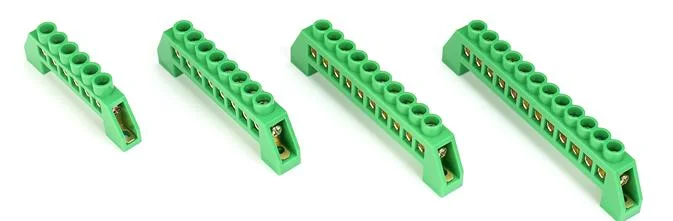
Terminal block strips come in several types to fit different wiring needs and applications. The most common distinction is between single-row and double-row (barrier style) strips. Single-row blocks are straightforward and space-saving, while double-row (also called barrier terminal strips) offer extra insulation and separation between connections for added safety and ease of use.
You’ll also find open vs. covered or enclosed designs. Open terminal strips are easy to access but less protected, whereas covered versions include protective barriers or transparent covers to prevent accidental contact and dust ingress.
In terms of wiring layouts, there are feed-through terminal strips, which allow wires to pass straight through from one side to the other, and dead-end strips, where each wire terminates at a separate pole without connection between them.
When it comes to capacity, terminal block strips vary between high-current or power distribution blocks and low-voltage or signal types. High-current strips, like power distribution blocks, handle larger amps and thicker wires, whereas low-voltage strips are designed for small signal wiring and delicate electronics.
Specialized variants include stackable terminal blocks that can be layered for complex wiring setups, modular blocks that snap together for flexible configurations, and types with jumpers, which let you electrically connect multiple poles easily without extra wiring.
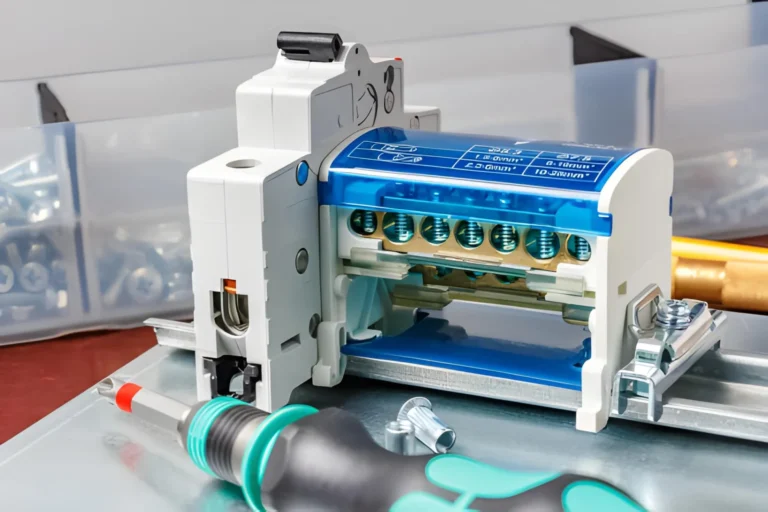
For high-current or power distribution needs, you might consider robust options like the 400A four-phase distribution block with transparent cover or the 250A power distribution block from Naihang Electric.
Understanding these types helps you pick the right terminal strip to match your electrical project’s demands, whether you need simple wire junction strips or advanced barrier terminal strips for industrial use.
Key Specifications and Selection Criteria for Terminal Block Strips
Choosing the right terminal block strip means paying close attention to its specs. Here’s a quick guide to the key features you should consider:
| Specification | Typical Range / Notes |
|---|---|
| Current Rating | 10A to 150A+ — choose based on your power needs |
| Voltage Rating | Commonly 300V or 600V; verify for your system |
| Wire Gauge Compatibility | Supports AWG 22 to AWG 6 in most models |
| Pole/Positions | From 2 up to 12+ poles, depending on circuit size |
| Material | Thermoplastic insulating base; terminals usually brass or nickel-plated for corrosion resistance |
| Certifications | UL, CSA, CE, RoHS — important for safety and compliance |
| Environmental Factors | Temperature rating, vibration resistance critical for industrial settings |
Why These Matter
- Current & Voltage Ratings: Ensure your terminal strip can handle the load without overheating or failure.
- Wire Gauge: The strip must fit your wire size—too small terminals won’t hold thick wires properly.
- Pole Count: Match with how many connections your project requires for smooth wiring.
- Material Quality: Good insulation and corrosion-proof terminals extend product life and safety.
- Certifications: UL-approved or CE-marked strips guarantee tested reliability and regulatory compliance.
- Environmental Suitability: For harsh or industrial environments, look for temperature and vibration-resistant options.
For reliable options like screw terminal strips with covers or grounding bars, check models such as the NHA27-E screw terminal grounding bar with cover or the NHA30-PC series terminal with white cover.
By focusing on these specs, you ensure your terminal block strip fits your application securely and stands the test of time.
Common Applications and Uses of Terminal Block Strips
Terminal block strips are essential in a wide range of settings thanks to their reliable wire connection and easy maintenance. Here are some common applications:
Industrial Control Panels and Automation: These blocks organize wiring for control systems, making troubleshooting and upgrades quicker. Screw terminal blocks and barrier terminal strips are staples in factory automation.
Power Distribution in Machinery and Equipment: High-current terminal strips efficiently handle power routing in heavy machinery, ensuring safety and durability.
Automotive and Marine Wiring: The robust design of terminal strip connectors makes them ideal for vehicle and boat wiring systems. Their secure connections help withstand vibrations and harsh conditions.
Home Electrical Projects: Terminal block strips simplify wiring for lighting, appliances, and outlets, making DIY home upgrades safer and tidier.
HVAC Systems and Building Wiring: Reliable terminal strips aid in connecting complex HVAC wiring, ensuring consistent performance and easier maintenance.
Prototyping and DIY Electronics: For hobbyists and engineers, barrier terminal strips provide organized, modular wiring solutions that speed up testing and modifications.
For projects demanding higher current loads and clear wiring layout, consider products like our single-phase electrical block with up to 500A capacity or the four-phase electrical block with transparent cover for enhanced safety and ease of use.
These applications highlight why terminal block strips remain a trusted choice for wiring needs across industries and home environments.
How to Choose the Right Terminal Block Strip
Selecting the right terminal block strip can make all the difference in your project’s success. Here’s a simple, step-by-step guide to help you pick the best option:
Step 1: Assess Your Project Needs
- Current and voltage requirements: Know your maximum load (e.g., 10A to 150A, 300V or 600V).
- Wire type and size: Check the compatible wire gauge (AWG) and whether you use solid or stranded wires.
- Environment: Consider temperature, vibration, and moisture conditions.
Step 2: Match Specs to Your Application
| Specification | What to Check | Example |
|---|---|---|
| Current rating | Must handle max current safely | 125A block for heavy power use |
| Voltage rating | Should exceed application max | 600V rated for industrial setups |
| Wire gauge compatibility | Match wire size (AWG range) | 12-24 AWG for home wiring |
| Pole count | Number of connection points | 4-pole strip for basic wiring |
| Material quality | Insulating base & terminal metal | Brass terminals, thermoplastic base |
Step 3: Connection Method – Screw vs. Others
- Screw terminal blocks:
- Pros: Secure, reliable, reusable connections
- Cons: Requires periodic tightening to avoid loosening
- Push-in or spring clamp styles:
- Pros: Faster installation, vibration-resistant
- Cons: Less suited for high current applications
Step 4: Safety Tips to Avoid Overloads
- Always check the current rating matches or exceeds your application.
- Use a torque screwdriver to tighten screws according to manufacturer specs; over- or under-tightening leads to poor contact.
- Avoid mixing wire sizes in one terminal; stick to the recommended AWG range.
Why Quality Matters: Choose Naihang Electric
Opting for reliable brands like Naihang Electric guarantees durable terminal block strips that meet global standards (UL, CE, RoHS). Their robust designs, like the SV-35 Hex Screw Single Phase Connection Block or the high-current C01-211 125A Two Phase Connection Block, offer excellent safety and performance for various projects.
By carefully matching your terminal strip to the requirements of your project, you get safe, long-lasting connections that simplify wiring and maintenance.
Installation and Wiring Best Practices for Terminal Block Strips
Tools Required
To install and wire terminal block strips properly, you’ll need some basic tools:
- Screwdrivers (flathead and Phillips)
- Wire strippers
- Crimping tools (for ring or spade terminals)
- Multimeter (for testing connections)
- Torque wrench (optional but recommended for precise tightening)
Step-by-Step Wiring Instructions
- Turn off power to the circuit before beginning any installation to avoid electric shock.
- Strip the wire ends about 8-10 mm, ensuring clean, unfrayed conductors.
- Choose the right terminal strip based on wire gauge and current rating; for details see our range of screw terminal neutral bars.
- Insert wires fully into the screw clamps or barrier slots.
- Tighten screws securely, applying the correct torque to avoid loose connections and overheating—around 5-7 lb-in depending on manufacturer specs.
- Use jumpers when linking multiple poles if required.
- Attach covers or markers to label and protect your wiring.
Using Ring/Spade Terminals vs. Bare Wire
- Ring and spade terminals provide a stronger, safer connection with less chance of wire fraying or slipping out. Always crimp or solder terminals properly.
- Bare wire insertion is quicker but requires extra care during screw tightening to prevent loose connections or damage to the wire strands.
Adding Covers, Markers, and Jumpers
- Covers improve safety by preventing accidental contact and protecting against dust and debris.
- Markers are essential for labeling wire functions, especially in complex setups.
- Jumpers help combine multiple terminals for power distribution without extra wiring hassle.
Common Mistakes to Avoid
- Over-tightening screws, which can damage the terminal or wire.
- Under-tightening, leading to loose connections and possible overheating.
- Using the wrong wire gauge for the terminal strip rating.
- Skipping insulation covers and markers, increasing risk of miswiring and short circuits.
- Connecting more wires than the terminal’s designed capacity.
Following these installation and wiring best practices ensures your terminal block strip connection is reliable, safe, and long-lasting. You can explore options like our screw terminal neutral bar with cover for added protection and ease of use.
Maintenance, Troubleshooting, and Safety
Keeping your terminal block strip in top shape means regular maintenance is a must. Start with regular inspections to check for any signs of wear or damage, such as cracked insulating bases or corroded metal conducting strips. Look closely for overheating signs—discoloration or a burnt smell can indicate excessive current or poor connections.
Loose connections are a common issue that can cause shorts or intermittent failures. If you notice sparks, flickering, or device malfunctions, tighten the screw clamps carefully and ensure wires are securely fastened. Using appropriate torque helps avoid damaging the terminals while ensuring a solid connection.
When troubleshooting:
- Check all poles for secure wiring.
- Look for broken barriers or cracked insulating bases.
- Identify any corrosion or dirt that might impact conductivity.
- Use a multimeter to spot shorts or open circuits between connections.
Always follow electrical safety standards compliance, including UL and IEC guidelines, to ensure safe operation and prevent hazards. Proper grounding and avoiding overloads play a key role in maintaining safe terminal strip installations. Remember, regular cleaning and replacement of worn parts extend the life of your terminal block strips and keep your wiring system reliable and safe.
Why Choose Naihang Electric Terminal Block Strips
Naihang Electric stands out for its commitment to quality and innovation in terminal block strips. Our products combine durable materials, precise manufacturing, and modern design, ensuring reliable performance for both industrial and DIY applications.
Key Features and Advantages
| Feature | Benefit |
|---|---|
| UL & CE Certified | Meets global safety standards |
| High-quality thermoplastic base | Resistant to heat and vibration |
| Brass/Nickel-plated terminals | Excellent conductivity and corrosion resistance |
| Variety of types (barrier, feed-through, stackable) | Flexible solutions for different wiring needs |
| Wide current range (10A to 150A) | Supports low-voltage signals to high-power distribution |
| Modular and space-saving designs | Easy installation and maintenance |
Customers appreciate the secure screw terminal connection, which prevents wire loosening, improving long-term safety.
Trusted by Customers Worldwide
Our clients from industrial control panel builders to home electricians have praised the reliability and ease of installation of Naihang Electric terminal block strips. Many rely on our line for power distribution, automation control, and marine wiring needs — a testament to the product’s versatility.
Explore Naihang Electric Solutions
Ready to upgrade your wiring projects? Check out our range of 8-ways insulated terminal blocks and high-current distribution blocks for options that fit your specific requirements. Need custom designs or consultative support? Contact our team for tailored terminal block strip solutions that match your exact needs.
Choose Naihang Electric for terminal blocks that combine quality, safety, and innovation in every connection.
FAQs About Terminal Block Strips
What is the difference between a terminal block and a terminal strip?
A terminal block is a broader term that includes insulated modular units with screw clamps for wire connection, often mounted on DIN rails or panels. A terminal strip (or barrier terminal strip) usually refers to a simple row of connected metal bars with screw clamps for easy wire junctions, typically without modular features.
Can terminal block strips be used outdoors?
Standard terminal block strips are usually designed for indoor use. For outdoor or harsh environments, look for specialized weatherproof or sealed models with higher IP ratings to resist moisture and dust.
How many wires can connect per position?
Typically, each position or pole on a terminal block strip connects one or two wires securely. Trying to add more can risk loose connections or shorts, so always follow manufacturer specs for wire capacity.
Are they suitable for solid or stranded wire?
Terminal block strips generally accept both solid and stranded wires. Stranded wires often require ferrules or crimped end terminals to ensure a stable connection and prevent strands from fraying.
What amperage is safe for home use?
For most home electrical projects, terminal block strips rated around 10A to 30A are suitable. However, always match the strip’s current rating to your specific application and avoid overloading to maintain safety.
Additional Common Questions:
Can terminal strip connectors be reused?
Yes, with care, screw terminal strips can be reused multiple times if screws and contacts remain intact.What wire gauge works best?
Most terminal strips cover a range from 22 AWG to 10 AWG; check specs based on your wiring needs.How to prevent loose connections?
Use the right torque on screws and consider using jumpers or covers to stabilize wiring.Are jumpers necessary?
Jumpers simplify connections across multiple poles without extra wiring, especially in power distribution blocks.Do terminal strips comply with safety standards?
Reputable brands like Naihang Electric provide UL, CSA, and CE certified terminal strips ensuring reliability and compliance.How do terminal blocks differ from wire nuts?
Terminal blocks offer a more secure, organized, and reusable connection compared to wire nuts, which are simpler but less durable.
For specialized needs, consider high-current options like our UKK 80A single-phase distribution block or the C01-207 125A two-phase distribution block, designed for demanding applications.